Category Archives: DYI

Bass Tube DIY

For a long time I have been very interested in building speakers… for home, for stage, for car and for outdoors… I have tried many different styles and types of enclosures… but I came home from work and looking around in my garage I decided to build a very quick bass tube out of free junk I have collected. i have always wanted to try this type of tube style with the extra added horn/port… and i figured I would capture some photos along the way to show the build.

I did some very basic calculations to find the perfect length and using the data sheet for the speaker (a Pyle Power Series Dual Voice-Coil 4-Ohm 6.5-inch 600-Watt Subwoofer) I optimized the volume for the 40 to 50 Hz frequency. Now the spec for the speakers says the range is 38 to 70 Hz, but the port will be tuned for 53 Hz.
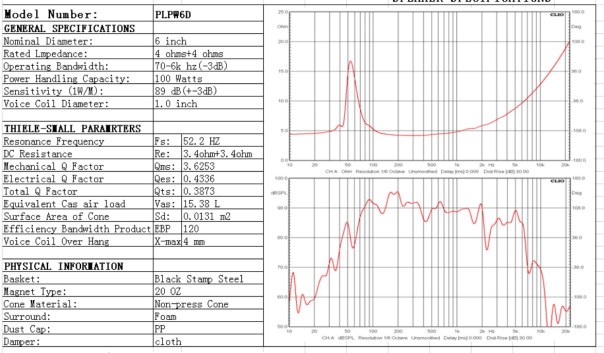
woofer spec

Some plastic tube and a cardboard tube (all free) will become the body, some scrap particle board will hold the speaker at one end and the other end the speaker connection. Some blanket matting will become the interior tube baffle or damping material, and some wire will be run the length to ensure I have good connections to the speaker (once it arrives in the mail).
IMG_0171

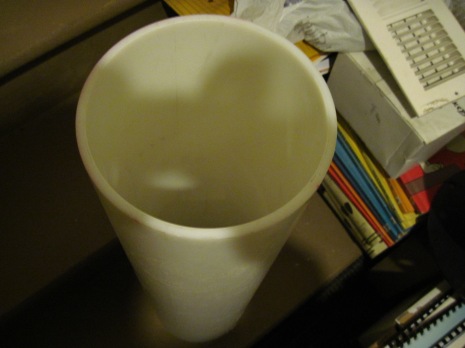
Plastic tube is cut to the correct length which is based on the volume needed for a ported enclosure.. in my case it was 27 inches.
IMG_0169

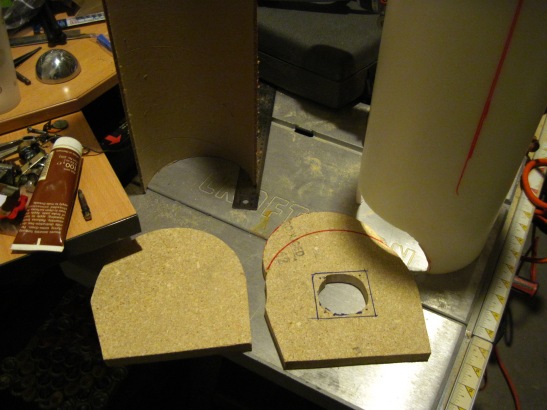
Here is the peices cut… the ends have a flat edge to keep the speaker from rolling around.
IMG_0183IMG_0185

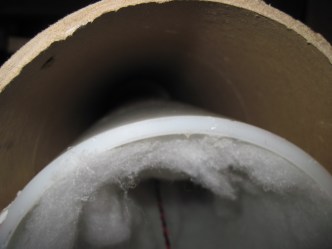
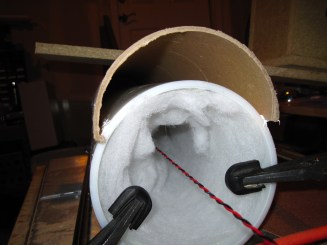
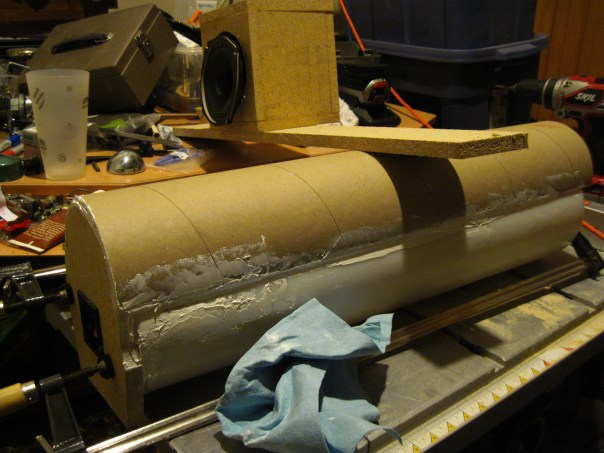
Some glued in matting… a dry assembly and now to put it all together. (Right photo: Looking down the tube cut in half to make the port.)
IMG_0180

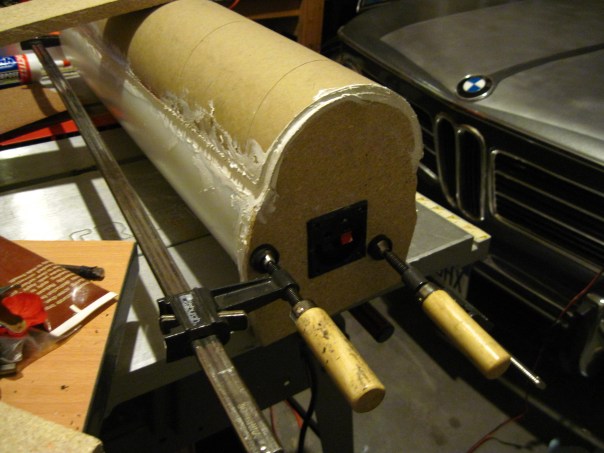
I just used some construction adhesive to join everything… since it is ported I am thinking the pressure will be minimal and not fatigue all of the parts connection points. I might run a few drywall screws in key locations just to be safe before I cover the tube.  HEY! There is the Stuka! My 1968 BMW 2002 in the garage for the winter taking a nap and on the trickle charger!
IMG_0178

For now… I will let it dry and wait for the speaker to arrive… once I get the woofer I will finish the build, conduct a measurement recording of a sweep frequency of 20 Hz to 70Hz and plot the data for a review and blog post. I hope to have it done soon!
 

3D Printer (Do it myself)

I wanted to try and start this project about a year ago and I finally made myself this week start to compile all of my hardware that I have been salvaging, hoarding, finding, purchasing and saving. I have been looking through my Make Magazine 3 D printer edition and seeing how others are making professional printers and realizing i can make one myself.  ( http://makezine.com/comparison/3dprinters/ )  This guide shows the quality, accuracy, cost, print size, etc… which provides the basic 3 D printer purchaser a way to find the right choice.

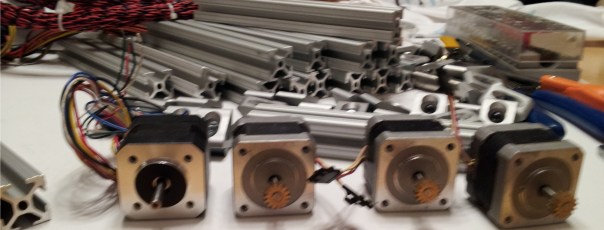
A 3D printer is something I have been thinking would be good for all my other electronic projects, to build housing, mounting hardware, special mechanical assemblies… I think it will also be good to learn the electronics and hardware behind the new products that are flooding the market… my print area will be approximately 8 inches by 8 inches by 10 inches… not to bad for a first 3D printer and for the size a commercial printer would be in the $1K to the $1.5K range.  My cost so far… about 40 bucks! I bought the stepper motors used and they are capable of a half step (around 0.9 degree) SO… 400 HALF STEPS would be one 360 revolution on the shaft.

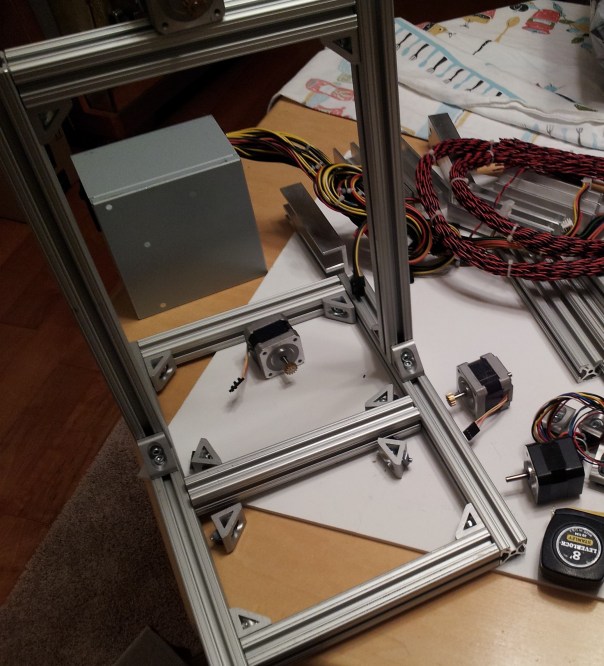
Below is the frame made our of 1.5 inch 80/20 stock aluminium, saved from a dumpster during a cleaning at MSI, a small micro satellite company that was purchased by SNC during my time in Littleton, Co.  I saved roughly $80.00 but was limited to the size of the pre-cut stock for my frame size… I can always increase the print size if i want to buy larger 80/20 stock… but for now the print size I have will work great .

3d printer_1

Below are the used, but good stepper motors I bought a while back in Colorado Springs at a little electronics shop that sells dismantled electronics.

3d printer_2 motors

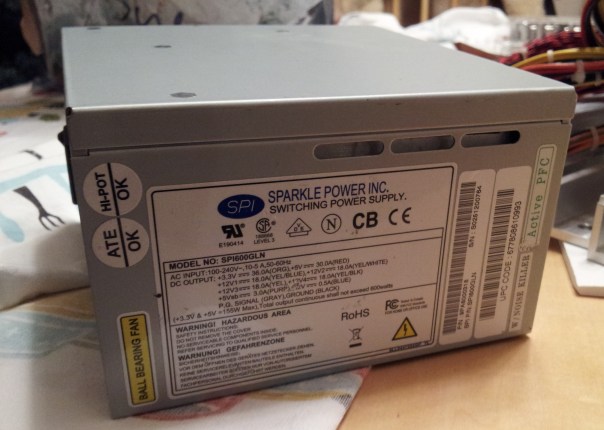
I even was able to get the power supply for free… just a general power supply out of a desk top PC… it is nice because the voltages and current supplied will be more than enough for the heat plate, spool motor, stepper motors for each axis and to power the electronics.

+3.3 Volts DC at 36 AMPS!

+5 Volts DC at 30 AMPS!

+12 Volts DC at 18 AMPS times 3!

3d printer_power supply

Next up, wiring diagrams and electronics… I want to pre-route the power wires, micro switches and stepper controllers to see what size my support housing and clearance for the motors, switches, and threaded rod needs to be.

After that… mechanical linkage, thread rod, mounting the steppers.

As I work on my printer I will be sure to capture more photos, provide electronics and wiring diagrams and hopefully by summer be printing for some cool Halloween stuff or a small something to send to my friends and family for holiday!

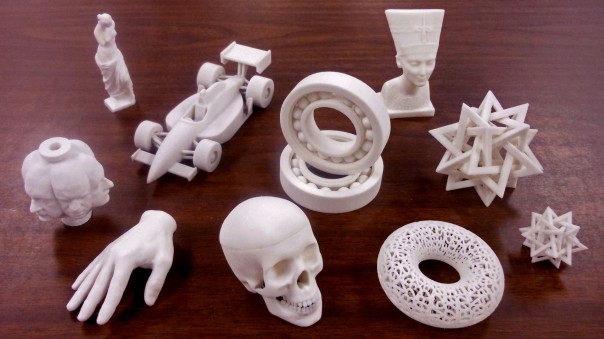
random-3d-printed-objects-hand-skull-c

Photo courtesy of Bulent Yusuf:

https://all3dp.com/best-sites-free-stl-files-3d-printing/